SLEEP APNEA

Helping Children Sleep Better

A study published in the journal Pediatrics showed children who had sleep-related breathing disorders were 40 to 100 percent more likely to develop behavioral problems resembling ADHD by the age of seven than kids without breathing issues. If your child is exhibiting ADHD-like symptoms—or has even been diagnosed with ADHD—it’s worth considering whether interrupted sleep might be the issue.

A study published in the journal Pediatrics showed children who had sleep-related breathing disorders were 40 to 100 percent more likely to develop behavioral problems resembling ADHD by the age of seven than kids without breathing issues. If your child is exhibiting ADHD-like symptoms—or has even been diagnosed with ADHD—it’s worth considering whether interrupted sleep might be the issue.

Teal valencia branding visuals

Dr. Kim is often the first to see things in your child’s mouth that may be contributing to their sleep problems. Dentists play a key role in early intervention by understanding how the structures of the jaw and mouth can also lead to sleep-disordered breathing in children. By evaluating the child’s upper airway and breathing patterns, Dr. Kim can determine your child’s risk and make a referral for proper diagnosis if necessary.

The first step is to figure out what’s keeping your child from getting the restful sleep that’s so crucial to good health and well-being. If you have any questions about sleep apnea, please contact our office or schedule an appointment for a consultation. We can start the process that will determine the best treatment for your child.

Signs Your Child May Have Sleep-Disordered Breathing

There are many signs and symptoms that may indicate that your child is suffering from sleep-disordered breathing. Some of these include:
  • Snoring

  • Night sweats

  • Sleep talking

  • Sleepwalking

  • Bedwetting

  • Coughing or choking while sleeping

  • Daytime sleepiness

  • Difficulty controlling emotions

  • Headaches in the morning

  • Waking up with a dry mouth or sore throat

  • Restlessness

  • Behavioral problems like hyperactivity, impulsiveness and rebelliousness

  • ADHD

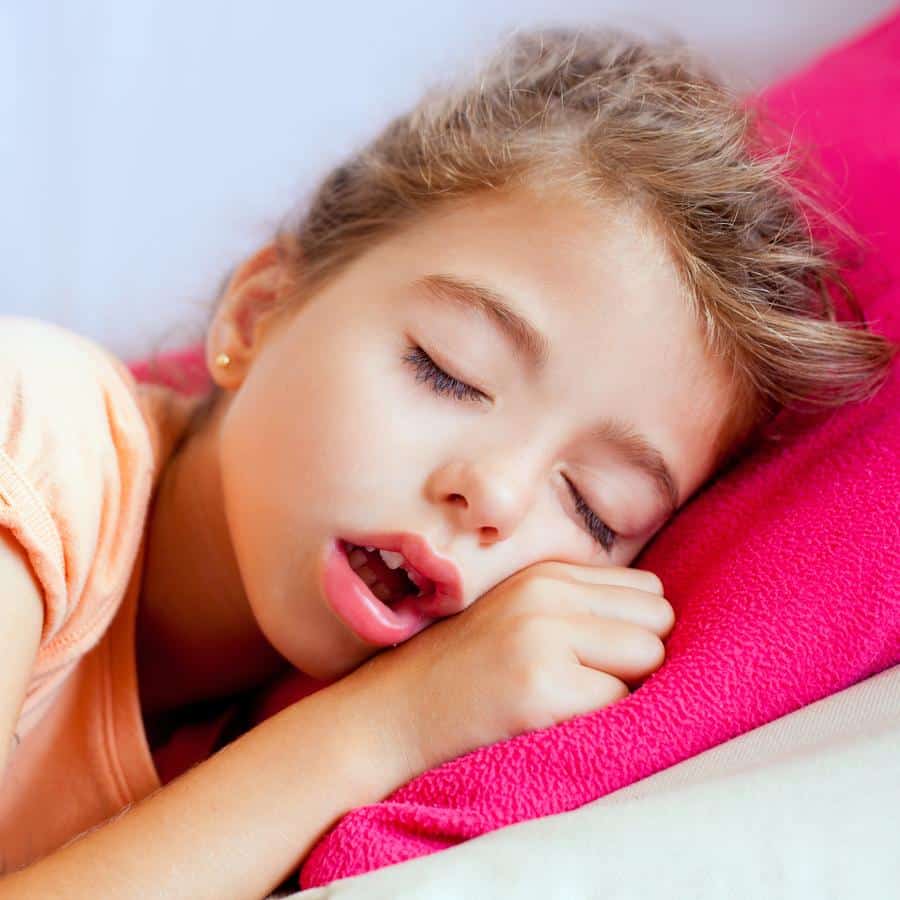
Child with sleep apnea

Treatment Of Sleep Apnea In Children

At Valencia Smiles Orthodontics & Pediatric Dentistry, our goal is to help your child with their sleep apnea  as much as we can. The best treatment depends on the cause and severity of symptoms, which can be determined by their doctor. However, some of the most common treatments include:


If your child’s case of sleep apnea is more severe, they may need to have surgery. Surgery is also an appropriate option if their sleep apnea is caused by enlarged tonsils and adenoids. This will help open up their airway if it is being blocked by the tonsils and adenoids.

Myofunctional therapy includes mouth and throat exercises to improve obstructive sleep apnea and snoring in children. Your child’s tongue and mouth may have muscle weakness that contributes to their condition, but myofunctional therapy works to strengthen those muscles. Therapy includes specific exercises to strengthen the muscles, which can help open your child’s airways. The exercises can be done at home, which makes this an excellent, non-invasive treatment option.

Orthodontic treatment uses maxillary expansion and mandibular advancement devices to create more space in the mouth. These devices include a palate expander, which expands the palate of your child’s mouth, or Invisalign® First, a clear aligner system that can also expand your child’s palate. These devices improve the flow of air through your child’s airway.

Treating any allergies your child may have can help with your child’s condition. Allergies and sinus inflammation can cause airways to constrict, which can also cause poor tongue posture. Treatment can include allergy/antihistamine medication, allergy shots for more severe cases, using a humidifier at night, and avoiding allergens, such as cigarette smoke.

If necessary, your child may use a continuous positive airway pressure (CPAP) machine. This is usually only used in severe obstructive sleep apnea cases in children that has not been helped by other treatment methods. However, it can be a difficult adjustment for children and may require behavioral support.

If your child is only experiencing very mild symptoms, we may recommend monitoring them over time. Without administering treatment, mild sleep apnea symptoms may resolve with time.

Group of happy children smiling

PEDIATRIC DENTAL CARE

Valencia branding visuals

REQUEST YOUR APPOINTMENT

We are dedicated to providing a safe dental home for our patients, and are looking forward to serving you and your family. Our team cannot wait to meet you!